Hans Urs Von Balthasar writes, “Dogmatic theology is the articulation of the conditions of possibility of Christian action in the light of revelation.” Reflecting on Balthasar’s idea, it seems to me that revelation is a lot like algebra. Unlike like the simple math of 2 + 2, which corresponds directly with the natural world, Algebra creates a seperate world of logic. Within this world formulas like a + b -c are used in a world that does not directly correspond to the natural world but has implications for the natural. As mathmatics continues to move further into theory and speculation, we discover a seperate world that becomes further and further abstracted from the natural.
Within this speculative world, one does not abandon logical consistancy. There is a logic within the mathmatical world that is self-containted within the argument. In Balthasar’s statement above, I see at least two worlds. First, I see the natural world where Christian action takes place. Then there is the world of revelation that is not discovered through natural observation.
The gospel makes the audacious claim that Jesus is God in the flesh. Some people may like the story but refuse to listen to logical claims within the context of the world of revelation created by the Bible. There are actually two arguments to explore here: one, the logical continuity of this world of revelation, and two, whether this world of revelation corresponds to this natural world. In other other words, is the archetect of the moral universe with the gospel story, the same architect of the natural in which we live.
Obviously, for Balthasar this world of revelation does correspond to the natural world. Working from a theology of analogy, Balthasar is wrestling with the question of a transcendence and immanence. How can man who is limited by time and space speak of a Creator outside of time and space? Space doesn’t provide a place to work through his analogy of being here, but bascially man does learn of the transcendent God through analogy.
As author of time and space, God creates a world of analogy with pointers to his character in all of creation. Man himself is created as the image of God. Yet, at the point of analogical connection, creation’s dissimilarity with the Creator is greater than its similarity with God. Without expanding on this idea further here, I suggest this idea provides the basis for that this world of revelation directly corresponds with the natural world.
Using the Bible and the Tradition of the Church, Balthasar works through the logic of revelation, which ulimately suggests that Jesus’s self-emptying act in the cross is God’s absolute expression of love. The first question one asks when facing this world of revelation might be, “Is the story of revelation satisfactory?” Does the story work? When someone says that they like the story of Jesus or that they find the story appealing, they are on some level responding to the logic of this world.
While not all Christians work through the logic of this world, they do begin with a belief in the story. As faith seeks understanding, this belief may work through the logic of the world on some level. As one makes a connection between the world of revelation and the natural world, one begins to discover the historical claims of Christianity. Thus revelation is seen as historical. It is not reached through reason but through faith. Yet working from faith, reason wrestles with the claims of revelation and the implications of revelation for action.
So for Balthasar dogmatic theology articulates how this world of revelation both creates the possibility for action and the implications for that action within the natural world. This is where it becomes difficult. In wrestling with the claims of revelation, theology explains the implications for actions in ideal terms. For example, the Christian is called to love as Jesus loved. The self empyting act of the cross is the pattern for behavior.
Yet as real human beings seek to act out these implications, their adherence to the challenge of Christian action is always less than ideal. Some people outside the world of revelation look at Christians behavior. Seeing actions that fail to reflect the image of love, they reject or challenge the claims proceeding from the world of revelation.
How does a Christian respond to this unbelief, scorn and even strong rejection and even hatred of the world of revelation? I think we continue to listen to the claims of dogmatic theology. We continue to observe the pattern of the cross. We continue acting by the power of the Spirit who helps us to translate this revelation into the natural world. In spite of our flaws, we continue seeking to embody self-emptying love revealing in some small measure that claim of revelation that love alone is credible.
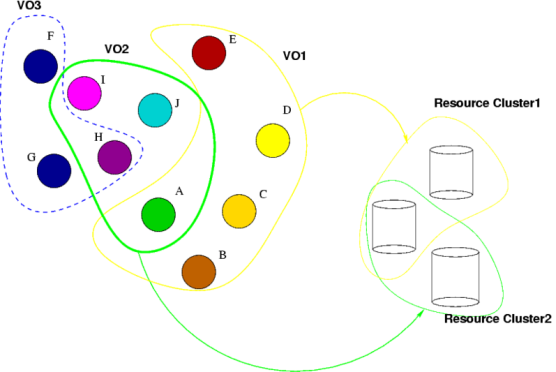 I quit posting web 2.0 updates because the number of variations on the same theme quickly began to bore me. Sort like listening to a cliched fugue. But I find the NYT story on Google and IBM’s plans for cloud computing pretty exciting. This will allow some heavy duty data crunching that can better process and explore the unlimited information pools across the internet.