Reflections along the way.

Author: Doug Floyd (Page 6 of 8)

Learning to Walk in Desert Lands

desertjourney

Every Lent we learn anew to walk the wilderness way. Like children learning to walk, we also are learning how to walk before our Father in heaven. So we return again and again, asking Him to teach by His Spirit, how to pray, how to hear, how to live.

We rehearse the wilderness way, the desert plains, the valley of the shadow of death. There are no experts here. There are no titles, no awards, no recognition. This is a place of stripping off our titles, our grandiose visions, our self-reliance. Continue reading

What Do I Know?

trees

I’m not sure how people keep up. The amount of information humans produce and consume rains down like a flood across the globe. Last spring, Science Daily suggested that 90% of the world’s data had been produced in 2011 and 2012: 90%. Companies face the never-ending challenge of storing, sorting and analyzing the endless stream of data.

I love and hate technology at the same time. Some days, I feel like I’m struggling to breathe beneath the endless rain of information.

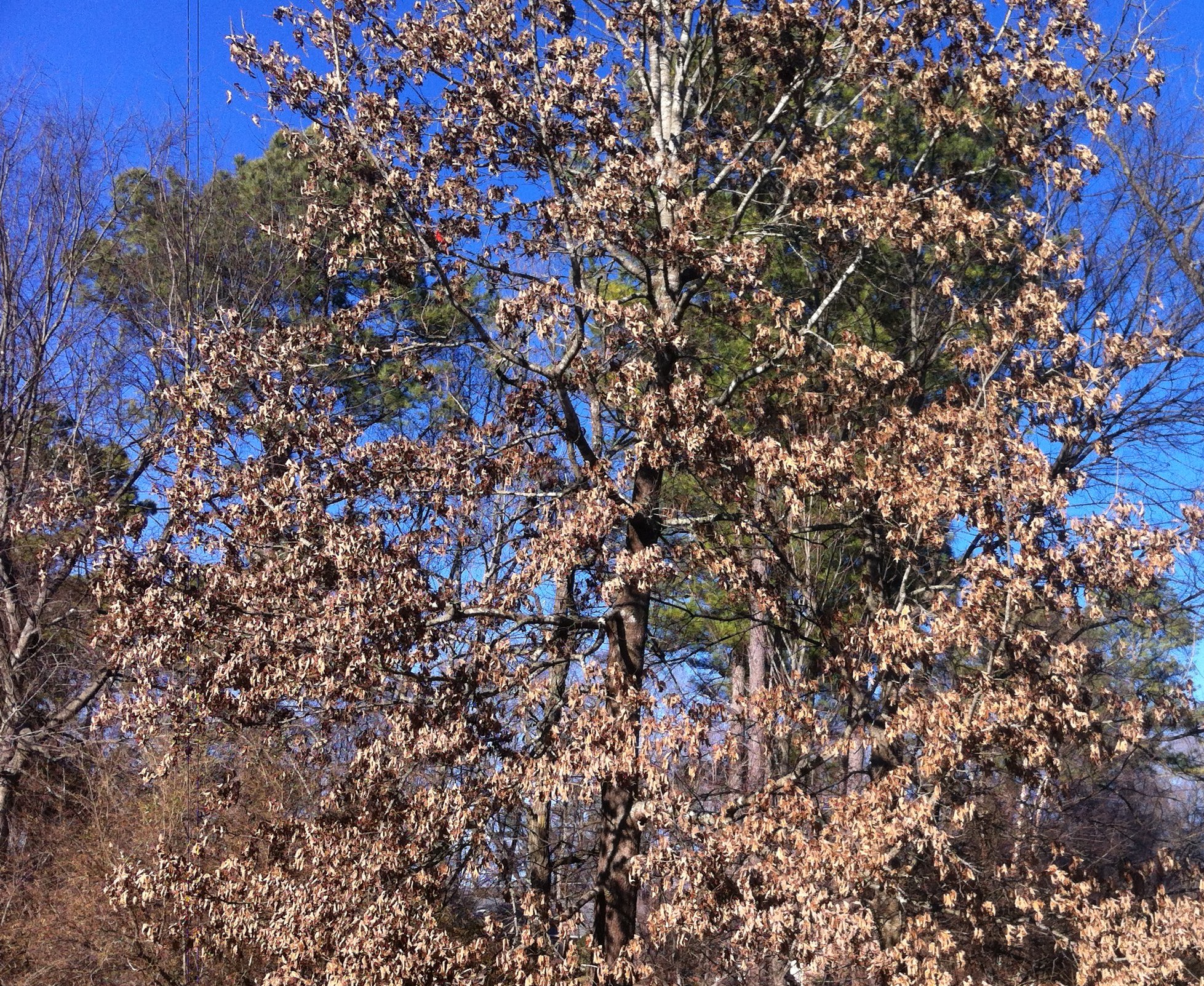
How do people read, let alone write as much as they do? Sometimes I want to simply breathe. Pause. Stare at the dead leaves on my tree in the backyard that refuse to let go and fly away in the late winter breeze. Every year, these leaves will not fall until mid-spring. Continue reading

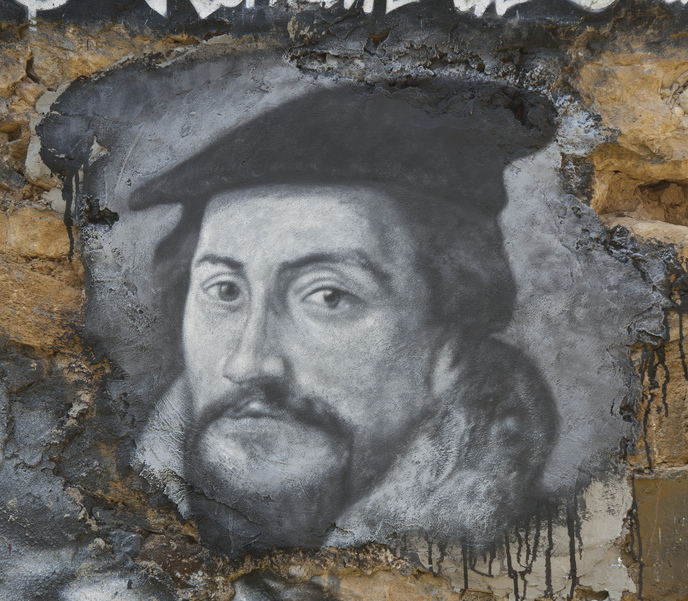
calvin on piety“‘The whole life of Christians ought to be a sort of practice of piety [pietatis], for we have been called to sanctification’ (3.19.2). For Calvin this practice of piety is itself a divine gift, a gracious way for disciples to participate in a life of communion with Christ.” – Matthew Myer Boulton (Life in God: John Calvin, Practical Formation, and the Future of Protestant Theology)

3 Tools of Fundamental Coherence in Richard Hooker

In “Richard Hooker and the Vision of God,” Charles Millers suggests that a “fundamental coherence” may be better language than “system” when referring to Richard Hooker’s thought in “Of the Laws of Ecclesiastical Polity.”

Instead of a formal system, Hooker works out a “constellation of fundamental ideas,” according to Olivier Loyer (cited by Miller). Working from this core, Hooker has a set of tools that help him explore a range of questions. These tools include rationality, hierarchy, and participation.

Drawing upon a vision of God’s creation as rooted in His divine order, Hooker sees the world as pervaded by “a sense of the rational character of law” and “the human mind’s rational capacity is fulfilled in apprehending and coordinating itself to such laws.” Continue reading

In the eucharist we Christians concentrate our motives and act out our theory of human living. Mankind are not to be ‘as Gods’, a competing horde of dying rivals to the Living God. We are His creatures, fallen and redeemed, His dear recovered sons, who by His free love are ‘made partakers of the divine nature’. But our obedience and our salvation are not of ourselves, even while we are mysteriously free to disobey and damn ourselves. We are dependent on Him even for our own dependence. We are accepted sons in the Son, by the real sacrifice and acceptance of His Body and Blood, Who ‘though He were a Son, yet learned He obedience by the things which he suffered; and being made perfect, He became the author of eternal salvation unto all them that obey Him; called of God an High-priest after the order of Melchisedech’. – Dom Gregory Dix

Walking By the Light of the Son

sunmoon

The sun shall be no more
your light by day,
nor for brightness shall the moon
give you light;
but the Lord will be your everlasting light,
and your God will be your glory. Isaiah 60:19 [1]

Exiled into Babylon, Assyria and the nations, the people of God groped in darkness. In Torah, darkness is often a sign of walking outside the way of Torah. In Proverbs 4:18-19, we read that

[T]he path of the righteous is like the light of dawn,
which shines brighter and brighter until full day.
The way of the wicked is like deep darkness;
they do not know over what they stumble.

In the land of darkness, humanity is turned away from the light of the Lord. Humanity descends further and further into dark words and dark acts. And yet, all humanity lives by the light of the sun and the brightness of the moon. In the land of darkness, the sun still shines. In fact, the sun and moon and the stars govern the earth.

14 And God said, “Let there be lights in the expanse of the heavens to separate the day from the night. And let them be for signs and for seasons, and for days and years, 15 and let them be lights in the expanse of the heavens to give light upon the earth.” And it was so. 16 And God made the two great lights—the greater light to rule the day and the lesser light to rule the night—and the stars. 17 And God set them in the expanse of the heavens to give light on the earth, 18 to rule over the day and over the night, and to separate the light from the darkness. And God saw that it was good. (Ge 1:14–18)

These great lights mark our days, our months, our seasons. They tell us when to sleep, when to rise, when to plant, when to harvest. For many cultures, these great lights are the only true rulers. The land of darkness lives under the rule of heavenly movements. From astrology to Baalism to Egypt’s cult of the nile (and the heavenly lights), humanity lived and died by the rule of these lights.

Power for survival comes from seeking to manipulate or control the heavens, the gods, or the nations. For some cultures, this took the shape of human sacrifice. For others, it took the form of slavery. For Assyria and Babylon it took the form of endless war. To live only by the light of the sun and moon and starts is live under the spell of idolatry. Idol worship is not about whether humans believe or rejects the supernatural, the gods or the divine. Rather, it is ultimately about wielding power for survival.

When the people of God were sent into exile, it was a sign that they were already wandering in darkness like the surrounding nations. To walk in the light of Torah is to be able to say “No” to the slavery of Egypt, to human sacrifice of Baalism, to the oppressive wars of Assyria and Babylon. This “No” was a divine reigning down from the heavens (above the sun and moon and stars). It was a “No” to the creatures acting like the Creator.

In the cult of Israel, we hear a “No” against all cults living under the sun and moon and stars. In his essay on “Hitler and Israel,” Eugen Rosenstock-Huessy explains,

Israel built a temple, it is true, but they added that God did not dwell in it, as the gods of all other temples did: Israel voided the Temple. Israel circumcised her young men, it is true; but they did it to the child in the cradle, not to the initiate novice of the fertility orgies: Israel voided the rites. Israel wrote “poems,” but she denied that she “wrote” them lest man-made “poems” became idols. She insisted that she was told and that she replied: Israel voided the arts. In these three acts she emptied the three great “speeches” of the heathen, the tribal, the templar, and the artistic, of their lure and spell and charm. [2]

Israel becomes the “No” to all man’s creaturely religions (including atheism).

In listening to God’s “No,” Israel recognized herself as God’s servant, merely a man in the face of God’s majesty. In this “No” all merely human desires are burned out, and our notion of God’s will is cleansed. “Revelation” is a knowledge of God’s will, after his “No” to our will has become known. Only then is God pure future, pure act – only when all his former creations stand exposed as non-gods, as mere artifacts. To have revealed what is not God is the condition for all our understanding of God. On this basis the Jews became prayer. Israel is neither a nation nor a state nor a race, but it is prayer.

This “No” frees humanity from the spellbinders who live under the sun and wield power under the sun. Israel’s “No” frees humanity from the Pharoahs and Herods and Hitlers. The world always lives under the threat of humans who stumble in darkness and leads others to stumble in that darkness. By equating their will and God’s will or by denying God and establishing their will, their insights, their wisdom as supreme, they control and destroy and threaten the future. Rosenstock-Huessy’s words continue to echo,

And immediately, we see the rise of world-wide spellbinders and race-worshipers, of dictatorships, and super states that un-repentingly identify their will and God’s will, their world and the real world. No separation of Caesar and Christ is recognized. Hence mankind stays forever in need of both testaments – in need of both the “No” of the Old Testament and the “Yes” of the New.

In Isaiah’s song, we hear the hope that the people of God sitting in exile were not forsaken by God. They passed through the death of man’s darkness and were restored to the land. From them, a conquering king would come, the Messiah. His rule was not “under the heavens” and rooted in wielding power like the kings of the earth (Psalm 2). His rule reveals the light that is brighter than the noonday sun. This light is greater than the sun or moon. This light says “No” to the exaltation of the creature over the Creator. This light reveals and restores humanity into the shape of living, loving relations with God, one another and all creation. This light fulfills Torah, embodies Torah. Jesus Christ the True Light of the World leads his people us to become truly human images of the Creator.

Even now, we are learning to walk in the light of the Son.

Image used by permission. Some rights reserved by MyDigitalSLR

[1] All Bible references from The Holy Bible: English Standard Version. (2001). Wheaton: Standard Bible Society.
[2] All quotes from Eugen Rosenstock-Huessy comes from his essay, “Hitler and Israel, or on Prayer.” From Judaism Despite Christianity. Reprinted by University of Chicago Press, 2011.

Christmas Trees in Advent

christmas_tree_duane_schoon

Advent rhythms gently beat in my heart while Christmas carols boom in my ears. I feel torn between the deep ache of Advent longing and the joyful outbreak of Christmas festival. How do I hold these two distinct rhythms together? How do I journey from the Jews crying out in exile to shepherds rejoicing at the manger?

Last Monday night we visited some friends who live in a 150-year-old family cabin. Stepping into their home felt like stepping into the past. It was as though I stood in the present and the past at the same time. Is there a way to keep standing in Advent reflection while also standing in the middle of Christmas trimmings?

Christmas joy lights my city. I see bright blue, green, red and white trees glowing atop the buildings. Shiny, happy trees spring up in homes, in yards, in stores and even in some churches. Like hearty fruit trees, the branches of these evergreens hang low with the colorful ornaments and glistening lights.

Ezekiel also sees trees all around him, but these trees are not shiny or happy. They are burning. They are falling. They reveal a world coming to an end. Looking back at the sparkling Christmas tree, I begin to see shadows of another age, a sad struggle, a world falling, a prophet crying. Egypt and Assyria who once stood tall like proud Cedars of Lebanon came tumbling down when the ax was laid at the root. One by one the nations around Judah fell. Then Judah toppled. The people of God were dispersed into the darkness of Babylon. Eventually Babylon falls.

The kingdoms of the world fell and will continue falling till the end of the age. No matter how great, how glorious the powers of world may be, they will not always stand. Kingdoms topple before the King. Wicked rulers who oppress their people, wicked managers who take advantage of their employees, wicked parents who abuse their children: all kings and kingdoms will fall. Evil will not prevail. The ax is laid to the root. Only one kingdom will stand: A kingdom of love.

I continue to gaze into the Christmas tree, and I am remembering a tree stump that came back to life. Isaiah looks at that stump of the House of David where the tree once was, and boldly says,

“There shall come forth a shoot from the stump of Jesse,
and a branch from his roots shall bear fruit.
                        And the Spirit of the LORD shall rest upon him,
the Spirit of wisdom and understanding,
the Spirit of counsel and might,
the Spirit of knowledge and the fear of the LORD.” (Is 11:1-2)

From a dead stump, the Kingdom of God springs forth with life eternal. He is the tree that appeared the least of all seeds. So often His kingdom looks weak, failing, falling and fading. Actually, His tree, his kingdom will one day grow greater than all the trees, “so that the birds of the air will come and nest in its branches” (Matt 13:31-32).

I gaze back at the Christmas tree, and I think that maybe it is standing in two places at once. The plainchant of Advent longing stills sounds in our Christmas joy and glimpses of Christmas joy penetrate the plainchant of Advent longing. Joy and sorrow are distinct and yet bound up in one another.

During Advent, I long for the king who is coming and whose kingdom of love and life will prevail. The colorful ornaments on the Christmas tree remind me of a fruit that bring will bring healing to the nations. Beholding the lights, I rejoice that His kingdom of light will shine brighter than the noonday sun.

image by duane schoon (used by permission via Creative Commons)

I’ve Got a Mansion

OLYMPUS DIGITAL CAMERAWhen I was growing up, we would sing,

“I’ve got a mansion just over the hilltop
In that bright land where we’ll never grow old
And someday yonder, we’ll never more wander
But walk on streets that are purest gold.”

I liked that idea: moving into a big mansion someday, sitting on the veranda, gazing out over the rolling green hills of my estate. In fact, I thought it would be nice to enjoy that mansion sooner rather than later.

We visited the Biltmore House, and I thought, “Now this is where I’d like to live.” There’s plenty of room to spread out. Friends could come to visit, enjoy a feast of food, play a few games, chat until the early morning hours and sleep late. We’d be living the life of Riley, er Vanderbilt.

I started dreaming about houses. For years, I’d dream about gigantic houses. The inside of the house always seemed so much larger than the outside. Inevitably, I’d discover rooms that I didn’t even know existed. Many of these dreams were spent exploring. Last summer, I went down to the basement of my “dream house” and discovered a warehouse-sized room. The room was filled with young people and a band was playing at the far end. Cool. I never realized there was a band playing in my basement.

As we wait in Advent anticipation, I’m thinking about those houses. Maybe it’s the cold outside. I’m thinking about staying with my bride and cuddling up on a cold night in front of the fire. What a blessing. A house provides protection from the wind and rain and snow.

What do you do in a house? You live there. You eat meals. You talk, tell stories, laugh, and maybe cry. You relax. When you’re in your own home, you can let down your guard. Walk around in your pajamas. Watch TV. Read a book. Play a game. You might decorate the house with pictures of friends and relatives. Your house is one of the key places for remembering. From looking at pictures to celebrating birthdays, you have rituals of remembering the family. It’s a place of refuge and protection from the elements and from intruders. The house is a place where you care for your body, your physical needs: from cleaning to resting to healing from sickness. A house is or should be a safe place. It’s a place to enjoy your friends and family. You could say that a house is built to hold a family.

God builds houses and teaches his people to build houses. The writer of Hebrews tells us, “For every house is built by someone, but He who built all things is God” (Heb 3:4). He taught Noah how to build a house that floats (the ark). Think about it. He showed Noah how to build a house that was still standing after Judgment Day.

Judgment Day, oddly enough, is connected to Advent. The Book of Common Prayer Daily Office Lectionary focuses on the book of Amos for the first two weeks of Advent. Two weeks of reading passages about God’s judgment and fire, burning down the houses of Israel’s neighbors and finally consuming Israel. When judgment falls, the houses built on sand fall, “Splat!”

Some really big houses have been built on sand. Think about Pharaoh’s house. It was big. Really big. It was also a house of slavery and it would not, could not stand.

As it turns out, our world is filled with houses of slavery, houses of anger, houses of pain and toil. The world is full of empty houses of loneliness, absence, and forgetfulness.

If a house holds relationships, think of all the broke-down houses: families, business, communities where people are hurt and hurt one another: No warm cuddly fires; no joy-filled music; only painful words and painful actions.

The Lord redeemed Israel from that house of slavery and guided his people, his children, his family, to a house on top of the world. From this house of love, true wisdom would be taught and true justice would be administered. From this house of love, the world gone wrong would be set right, peace and hope and joy would finally prevail over the endless echoes of war.

During Advent we look for the coming, the unveiling of this house, this kingdom, this city. During Advent we hope in the coming Christ who has redeemed all those broken down houses and is building the City of Peace. He is building it through his own body, through his own people. He is fashioning living stones: precious rubies and sapphires and emeralds that will gleam in the full light of His glory.

When this house is fully unveiled, when Christ himself comes in all his glory, the world will not learn war anymore. As we wait with hope this Advent, let us walk in and toward the light of His love.

Isaiah 2:1-5
The word that Isaiah the son of Amoz saw concerning Judah and Jerusalem.
Now it shall come to pass in the latter days
That the mountain of the LORD’s house
Shall be established on the top of the mountains,
And shall be exalted above the hills;
And all nations shall flow to it.
Many people shall come and say,
“Come, and let us go up to the mountain of the LORD,
To the house of the God of Jacob;
He will teach us His ways,
And we shall walk in His paths.”
For out of Zion shall go forth the law,
And the word of the LORD from Jerusalem.
He shall judge between the nations,
And rebuke many people;
They shall beat their swords into plowshares,
And their spears into pruning hooks;
Nation shall not lift up sword against nation,
Neither shall they learn war anymore.
O house of Jacob, come and let us walk
In the light of the LORD.


Advent Begins in Darkness

advent

Advent begins in darkness.

The light of Advent reminds us of how dark the dark truly is. Over time our eyes have grown accustomed to the dark. This is another way of saying that darkness blinds us to the glory of light, to thickness of color, to surprise of beauty. We’re not totally blind. “We live in the age of glare,” according to the poet Rod Jellema. The “age of glare” blinds us to the dazzling whiteness of white in the face of our Savior.

To enter into the story, the movement, the rhythm of Advent, we go by way of story. We rehearse the story of a people forsaken by God in the dark waters of Babylon. We lean into the words of the prophets. In the mouth of these witnesses, we hear the terrible drumbeat of a world gone wrong, of mountains crumbling into the sea, of nation after nation falling to the beast of Babylon. Where is God when our world comes to an end?

Sitting by the waters of Babylon, Israel cannot voice her songs. Blinded by the glare of lesser gods, Israel stumbles into darkness. The Lord turns his back as the evil empire crushes and consumes the apple of His eye. The smoke of a burning Temple eclipses the light of Zion. Who can sing praise in the place of the dead?

Jeremiah gives voice to the Lamentations of God’s people dispersed into the four the winds, driven into exile, left to wither on foreign soil. He moans,

I am the man who has seen affliction
under the rod of his wrath;
he has driven and brought me
into darkness without any light;
surely against me he turns his hand
again and again the whole day long. (Lamentations 3:1-3, ESV)

The anguished cry of God’s prophet still resounds today. Deep darkness smothers our world: Over one million Syrian refugees are dying to find a place of safety. Thousands Eriteans flee the unthinkable conditions of their own land only to be kidnapped and suffer unimaginable torment by traffickers seeking money. Countless people struggle in a perpetual state of war. By some estimates over 30 million people live in slavery throughout the world (with about 60,000 in the United States). The undoing of sin infects and affects every human on this planet.

We cannot even fully bear the darkness of sin. It would kill us. It did kill Jesus. He entered into this darkness with the only Light this world will ever truly behold. He is the luminous darkness. During Advent, we face this luminous darkness: remembering the exile of Israel and the coming redeemer.

We behold the place of exile where God’s people and God’s planet grieve in exile. In this exile, we face our own desperate need for the Light of God. We remember Jeremiah’s hope in the midst of Lamentation,

The steadfast love of the Lord never ceases;
his mercies never come to an end;
they are new every morning;
great is your faithfulness.
“The Lord is my portion,” says my soul,
“therefore I will hope in him.” (Lamentations 3:22-24, ESV)

The light of God penetrates our dark smog and opens our eyes both to his glory and our desperate need. The true hope of Advent strips away the false promises, false delights and false hopes that distract our age. There is no hope outside of the love of God in Christ. We cling to that hope, longing for justice, for healing, for redemption, longing for the true Light that gives light to everyone coming into the world (John 1:9).

Entering the Anglican Communion

anglican communionWhat would cause an old Bapti-costal, house church guy to become an Anglican Priest? That’s the question I’ve been asking myself over the last several months. I thought I might attempt to write a few posts, reflecting on this transition. If you’re interested, read on.

“Friendship is born at that moment when one person says to another: “What! You too? I thought that no one but myself . . .”” C.S. Lewis

My step into the Anglican communion might be described as a step toward friendship. I was not in the middle of search for the “true church.” I was not relentlessly hoping for some affirmation from an ancient tradition to tell me I was important. For several years I had been enjoying house church with a group of friends. Our little house church ate together, prayed together and sought to live out our faith in the midst of the culture around us. I loved and still love our little house church (you can read more about our house church here).

You might say I was “surprised by friendship.” In fall of 2009 and spring of 2010, I was invited to speak to a group of local Anglicans about the Torah from an Old Testament lens and Torah through the lens of Paul. To my surprise, I discovered friends like who shared similar passions, raised similar questions and were longing for the same kingdom come. Over the next several months and years, I spent time with several of these guys, read books with them, and worshipped with them.

Augustine spoke of the kingdom as an ever-expanding community of friends. On earth, this community will always fall short, but it hints at a fullness of community to be revealed one day. Spending time with several of the Anglican ministers tasted of the same sweetness that I enjoyed with my friends in the house church.

I met these gentlemen shortly after our house church had dropped down to meeting only once a week. Since 1999, we had been gathering on Sundays and Wednesdays, and since 2004 we had met in a little storefront recreated into a living room/library atmosphere. Everyone in our church had a key and it was used for all sorts of gatherings: worship, concerts, meals, movie nights, weddings, birthdays and more. It was a little home we all shared.

fire

In February 2008, we suffered a devastating fire, which destroyed our equipment, damaged our books and drove us back into my home. For a variety of reasons, 2008 was a difficult and discouraging year. We decided to quit meeting on Sundays and gather only on Wednesday nights.

During this time my friend Izaak and I began visiting churches in Knoxville and Maryville on Sunday mornings. It gave us an opportunity to experience a range of expressions in the Christian community of our city. After I met with the Anglicans, Izaak and I visited both local Anglican churches: Apostles Anglican and Old North Abbey. We were both “surprised by friendship.”

In fall of 2010, I joined several Anglicans on trip to England. The hospitality of the folks at Holy Trinity Brompton refreshed and surprised me yet again. I discovered Christians from all walks of life (Anglican and Free church) working together to proclaim the kingdom of God in word and action.

I felt at home among “Anglican” folks, but I still loved my house church and still believed in house church as a community where God’s people could learn and practice a way of kingdom living that translated into the community at large. My Anglican friends didn’t see this as a threat but rejoiced in house church. In fact, the spirit of hospitality toward other Christian works and traditions amazed me. I sensed among the Anglicans a heart to affirm expressions of the kingdom of God all throughout the community.

I continued to walk alongside these new friends even as I held to my older friends in house church and other Christian communities. In walking toward Anglicanism, I never felt like I was being called to walk away from other Christians. Instead, I felt the call of communion and the joy of Augustine’s ever-expanding circle of friends.

I think again of C.S. Lewis when he writes, “Christ, who said to the disciples, “Ye have not chosen me, but I have chosen you,” can truly say to every group of Christian friends, “Ye have not chosen one another but I have chosen you for one another.” The friendship is not a reward for our discriminating and good taste in finding one another out. It is the instrument by which God reveals to each of us the beauties of others.”

Lewis and Augustine help me to frame one aspect of my movement toward Anglicanism and sense of call to become an Anglican Priest. I believe that the Father’s call that led me into ministry in the late 80s was a call into serving His people, His children, His every-growing communion of love.* Communion has been a central value among Anglicans since the earliest formation. Yes, it is and has been messy. Augustine saw wrote about the messiness so very long ago. And yet, we are called to press on into love.

In my friendships, I cautiously stepped into communion with the local Anglicans. WIth the discernment of the local and regional communion, I began movement toward priesthood. In the fullness of time, I’ve entered into service under the Bishop of the Diocese of the South. By God’s grace I want to continue extending that hospitality I’ve enjoyed to the friends of God (and soon to be friends of God) all around me.

* More on the journey from the 80s to the present in another post.

« Older posts Newer posts »

© 2026 Pilgrim Notes

Theme by Anders NorenUp ↑